Looking for real user experiences and an in-depth BypassGPT review after seeing mixed claims about its safety, accuracy, and ability to bypass AI detection. I’m unsure if it’s trustworthy or worth paying for and need help understanding its pros, cons, and any risks before I commit.
BypassGPT Review
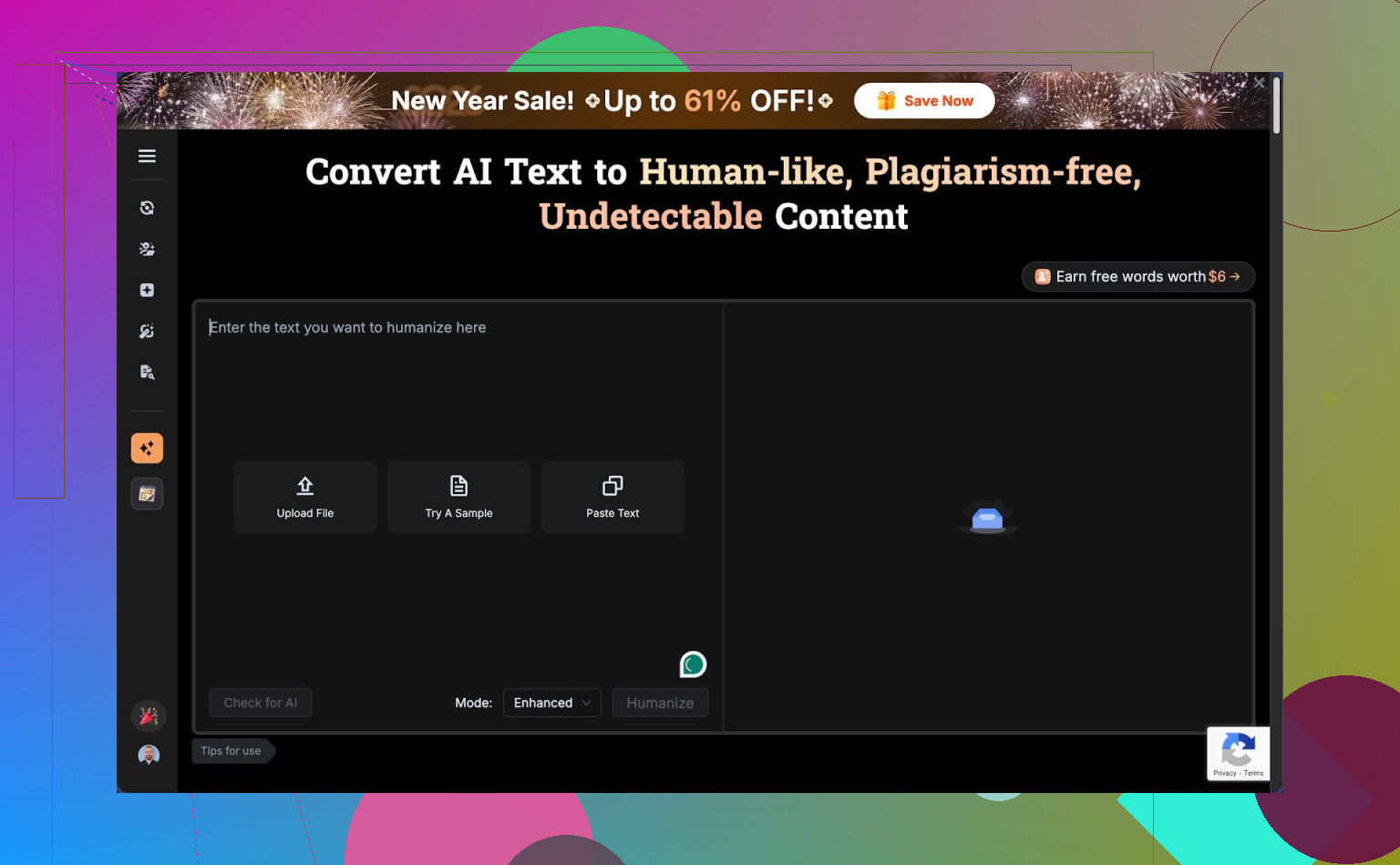
I tried BypassGPT a few times and ran into a wall before I could do any serious testing.
You get a tiny free allowance. Each input is capped at 125 words, and there is a total monthly limit of 150 words. So I had to trim my usual test text down until it no longer matched my standard benchmark samples. That breaks comparison testing.
I signed up for a free account and got a bit more room, around 80 extra words. That still let me process only one of my normal test samples, and even that one had to be shortened. The limit seems tied to IP. New accounts from the same connection do not reset it, unless you swap IP with a VPN.
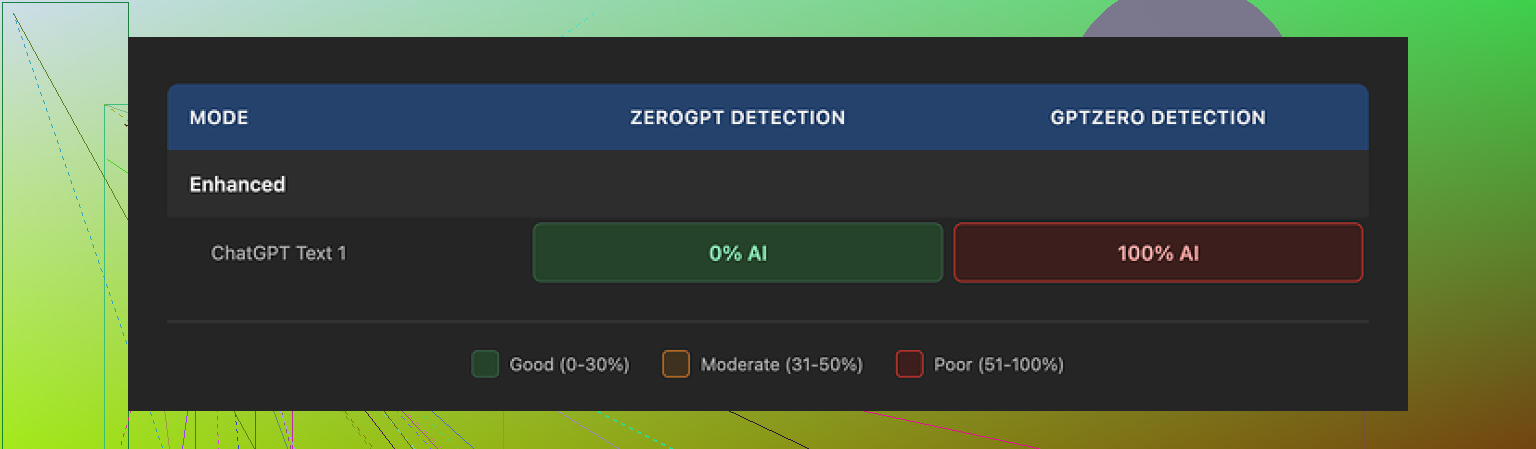
Here is where it got weird for me.
On one test, BypassGPT produced text that scored 0 percent AI on ZeroGPT. Looked good at first glance. Then I ran the same output through GPTZero. That one marked it as 100 percent AI. So you end up with the same paragraph getting opposite verdicts.
BypassGPT has its own internal detector. It claimed the output passed all six tools in its list with a perfect score. That does not match what I saw when I checked those tools directly.
Quality wise, I would put the writing at around 6 out of 10.
The first sentence came out broken, with grammar issues. It also kept em dashes in places where I usually see tools try to smooth them out or replace them. Some phrases read like awkward machine rewrites rather than something a normal person would type. I even spotted a typo in the generated text. For something marketed as a “humanizer”, that lowered my trust fast.
Pricing is a bit odd too. The paid plans I saw were:
• Around $6.40 per month if you pay yearly for 5,000 words.
• Around $15.20 per month for an unlimited plan.
What bothered me more than the price was the terms of service. The wording gives BypassGPT broad rights over anything you send into the tool. That includes permission to reproduce it, distribute it, and produce derivative work from it. If you deal with client content, contracts, or anything you care about keeping under control, this is a problem.
If you want to read a longer breakdown with screenshots and AI detection proof, I used this writeup as a point of reference:
On the same batch of test samples, I got better results from Clever AI Humanizer. The text looked more like something I or another human would write, and it scored higher on multiple detectors in my runs. It is also free to use, which makes experimentation a lot easier when you are trying to compare tools without dealing with micro word caps.
1 Like
I paid for BypassGPT for a month to see if it was worth using for client stuff, so here is a straight answer.
Short version. I do not trust it for anything important. I would not pay again.
My experience, broken down.
-
Free and paid limits
The free cap is tiny, like @mikeappsreviewer said, so real testing is hard.
I upgraded to the cheaper paid tier. The word counter felt off. Some inputs charged more words than the text length. I did not track every request, but the “remaining words” dropped faster than expected. If you plan to process long articles, that matters. -
Detection results
I tested the same outputs on
• GPTZero
• ZeroGPT
• Copyleaks
• Originality
• Winston AI
On some paragraphs, BypassGPT passed 3 tools and failed 2. On others, it failed all.
I compared that to a simple “rewrite” using ChatGPT with a human-ish prompt. In a few runs, ChatGPT text scored better or equal on detectors, without extra tools.
So the promise of “bypasses all AI detectors” did not match what I saw. It helps sometimes, fails other times. Not reliable.
- Text quality
Quality was mixed.
Pros:
• It changes structure and wording more than a basic paraphraser.
• It adds minor variation in sentence length.
Cons:
• Weird phrasing in many outputs.
• Some incorrect word choices.
• At least two grammar mistakes in a short 300 word test.
• Occasional “off” tone shift that would not match a real writer’s style.
If you send client blog posts or academic work through it, you will need to manually edit. A lot.
- Safety and privacy
This part bothered me the most.
The terms give them wide rights over your content. Similar to what @mikeappsreviewer mentioned. If you paste NDA documents, student essays, or unique SEO content, you lose control. For agency work, that is a risk. I stopped sending client stuff the moment I read it in detail.
If you care about data control, this is a big red flag.
-
Accuracy of their own “detector check”
Their built in checker often said “passed all tools” while my manual checks showed fails. It felt more like marketing than a serious audit. Once I saw that twice, I stopped trusting their internal reports. -
Is it worth paying
If your goal is:
• occasional light rewriting for low stakes content
• you do not care if it fails some detectors
• you do not care if the text sits in their system
Then the cheap plan is not terrible, but you still get better control by tweaking prompts in a normal AI.
If your goal is:
• serious academic work
• paid client content
• long term brand copy
• strict privacy requirements
I would skip it.
- Alternative
On my tests, Clever Ai Humanizer did a better job at:
• keeping text readable
• avoiding obvious AI “rhythm”
• passing several detectors on the same sample
It is also free to try without harsh word caps, so you can run your own experiments properly. I would start there before spending money on BypassGPT.
Practical advice if you are unsure:
• Take one real article you wrote.
• Run it raw through 3 detectors. Save the scores.
• Run the same article through BypassGPT.
• Run another version through Clever Ai Humanizer.
• Check all again on the same detectors.
Compare:
• detector scores
• how “human” it sounds to you
• how much editing you need
For me, BypassGPT did not justify the price, the privacy tradeoff, or the inconsistent detection results.
Short version: I’d treat BypassGPT as a “maybe for toy use, no for anything that actually matters.”
I agree with a lot of what @mikeappsreviewer and @sterrenkijker already ran into, but I’ll come at it from a slightly different angle: workflow and risk, not just detector scores.
-
“Bypasses all AI detectors” claim
In practice, no tool can guarantee that, and BypassGPT is a textbook example of why. Detectors change, models change, thresholds change. You’re basically paying for a snapshot in time that can break overnight. So even if you get a 0 percent AI score today, that same text might get flagged next week when a detector updates. That makes it a bad long term strategy if you care about grades, compliance, or clients. -
Text feels like “AI wearing a wig”
I’ve seen people paste BypassGPT output into group chats and Slack. Native speakers can spot it pretty fast. It has that slightly over-edited, rhythm-less feel. Not always horrible, but it often reads like someone who learned English from blog posts and never talked to another human. For casual content, meh, you can live with that. For something that’s supposed to sound like you, it’s off. -
Detectors vs real humans
This is where I slightly disagree with the heavy focus on detector screenshots. Yeah, BypassGPT sometimes flunks GPTZero or ZeroGPT even though its own checker says it “passed everything.” That’s a problem. But honestly, the bigger issue is human review. A professor, editor, or picky client is more dangerous than an automated detector. If the tool produces awkward or inconsistent tone, that alone can trigger extra scrutiny, even if the bots say “human.” -
Privacy and content ownership
This is the hard nope for me. The broad rights in their terms are not a theoretical problem. If you work with:
- students
- agency / client content
- anything under NDA
you really cannot afford vague “we can use your stuff” language. It is not just paranoia. If a client’s wording or idea shows up in some future model or example somewhere, that mess is on you, not BypassGPT. For random hobby content, okay, you might not care. For real work, that is a line I would not cross.
- Is it worth paying for?
Ask yourself what problem you are actually solving:
- If it is “I want to avoid writing altogether,” no AI humanizer is going to keep you safe forever.
- If it is “I’m okay using AI but want it to sound more natural,” there are cheaper and safer ways to do that with careful prompting and manual edits.
- If it is “I must pass AI detection at all costs,” you are already playing a losing game long term. Tools like BypassGPT just delay the pain.
- Alternatives in real life use
When people I know tested BypassGPT side by side with other tools, Clever Ai Humanizer kept coming up as the thing they stuck with longer. Not saying it is magic or flawless, but:
- it generally produced more natural, less robotic text
- it was easier to experiment with without slamming into microscopic word caps
- it gave more consistent results across multiple detectors in day to day use
If you are on the fence, Clever Ai Humanizer is the one I would actually pull up and test deeply, instead of handing BypassGPT money just to discover the same limits everyone else already hit.
- Practical takeaway
- BypassGPT: ok for low stakes, not great quality, privacy concerns, inconsistent detection performance, and marketing that overpromises.
- For serious work: write more of it yourself, use normal LLMs carefully, and if you really want a “humanizer,” something like Clever Ai Humanizer plus your own editing is a lot more defensible.
If you’re debating paying for BypassGPT specifically, my answer would be: skip the sub, test a free option like Clever Ai Humanizer, and invest your time in learning how to prompt and edit instead of chasing a “stealth AI” silver bullet that doesn’t really exist.