I was checking my iPhone storage to free up space and noticed it says Applications, which confused me because I expected to see apps listed differently. I’m not sure what counts as Applications in iPhone storage or if it includes app data, and I need help understanding it so I know what I can safely delete.
Applications on iPhone storage is a messy label. I got tripped up by it too. You look at the bar, see a fat chunk called ‘Applications,’ then count the apps you installed, and the math feels off.
What I found is simple enough. iPhone is not only counting the app icon you tapped from the App Store. It rolls a few things together.
First, there is the app itself, the binary, the code needed for it to run.
Then there are support files. Extra language files, downloaded resources, stuff the app expects to have nearby.
Then there is the part most people miss. Cache and temp data. Social apps stash images. Video apps keep chunks around. Games leave behind assets. iOS is supposed to trim some of this when space gets tight. In my use, plenty of it hangs around longer than you’d expect, and the Applications number swells.
If you want the real breakdown, go to Settings > General > iPhone Storage.
Give it a minute. Mine always pauses there while it figures itself out. After it loads, you get a list of apps from biggest to smallest. Tap one, and you usually see two buckets:
App Size, the installed software
Documents & Data, your downloads, chats, media, and other saved junk tied to the app
This part mattered more than I thought. When my phone got close to full, performance dropped in ways I first blamed on age. Camera took longer to open. App switching felt sticky. Keyboard lagged once in a while. I had under a few GB free, and the phone was struggling more from storage pressure than from old hardware. Took me too long to notice tbh.
I tried the manual route first. Deleted big message threads. Removed old attachments. Cleared Safari data. It worked, sort of. It was also annoying to repeat.
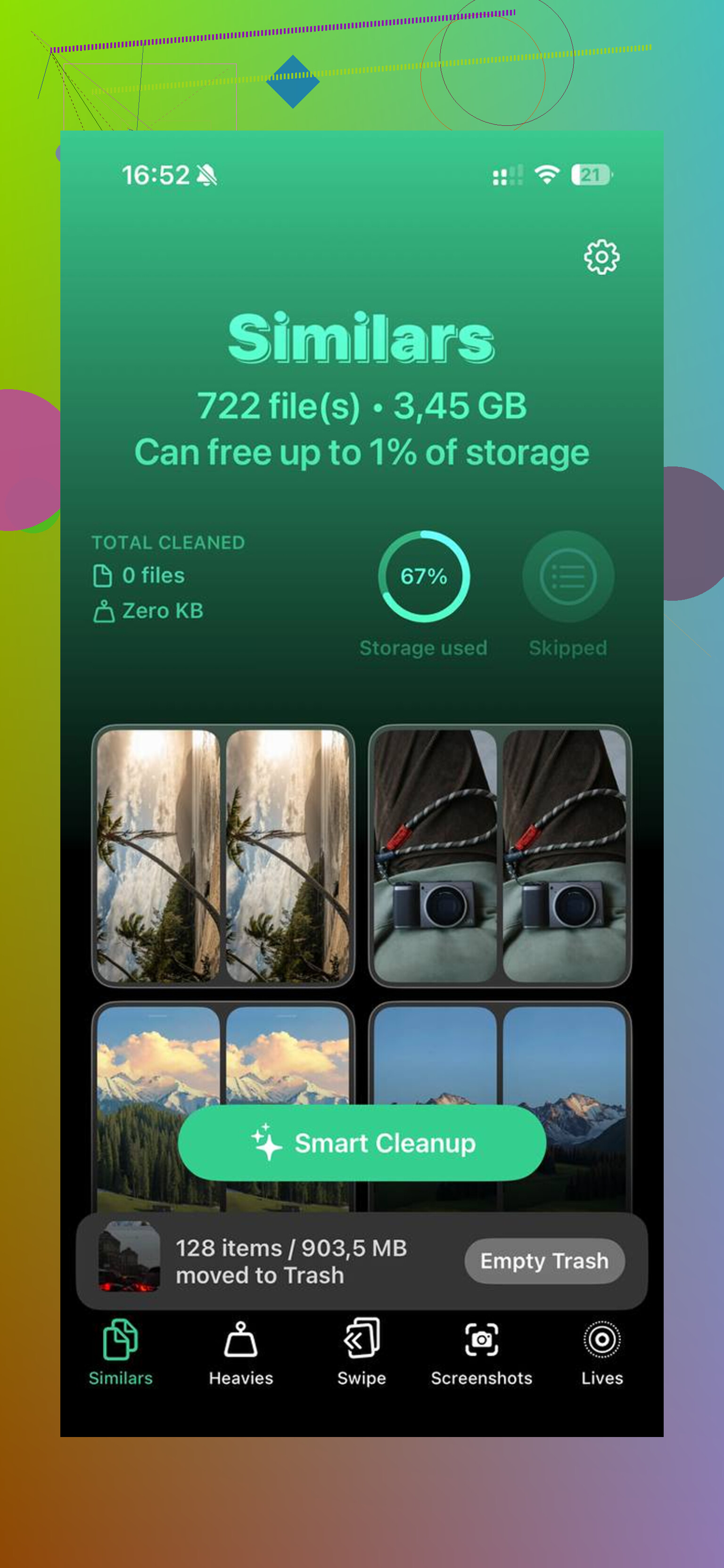
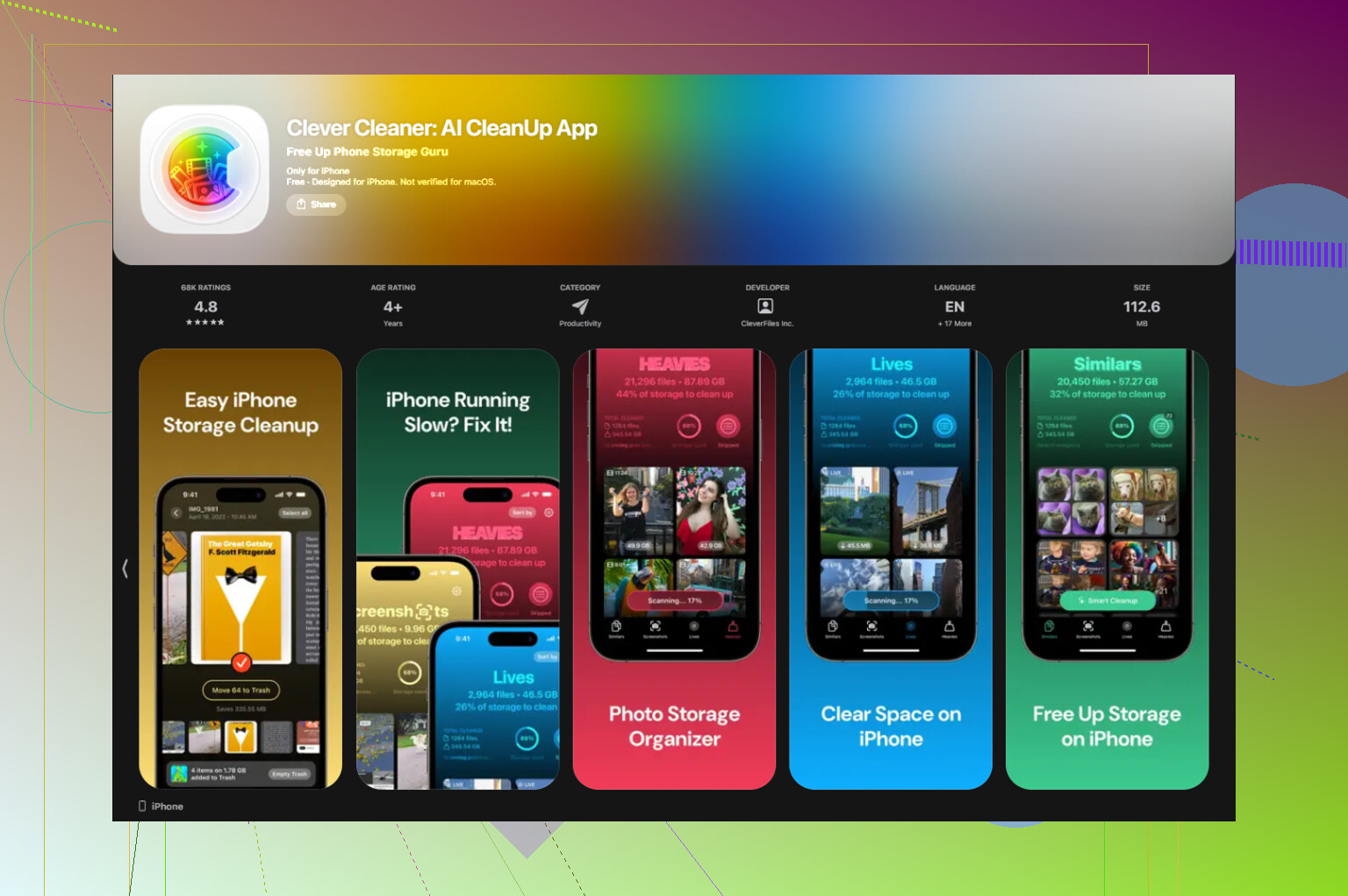
So I used a cleanup app. The one I stuck with was Clever Cleaner. For me, the useful part was not hype, it was speed. No ads popping up every few taps, no paywall halfway through, no upgrade nag every ten seconds. It runs on-device too, which I preferred.
What helped most on my phone:
Heavies tab, it sorts media by exact file size, so the worst offenders show up fast
Similars tab, it flags near-duplicate photos and blurry shots
Screenshot size display, so you see what each batch is costing before deleting
I cleared a few GB in one pass and the phone felt smoother right after. Not magic. Space was the issue, and freeing space fixed it.
There are also two built-in things worth using.
Offload Unused Apps:
If you have a big app or game you barely touch, offload it from iPhone Storage settings. This removes the app itself but keeps its data. Reinstall later, and your saves and settings are still there.
Safari data:
Go to Settings > Safari and clear History and Website Data. I got back more space there than I expected. Some of it seems to feed into the vague storage categories people complain about.
So yeah, ‘Applications’ means more than installed apps. It includes the app package, support files, and the pile of leftover working data apps build over time. If your iPhone feels slow, check storage before assuming the phone is cooked. Open the storage list, look at the biggest apps, and trim the obvious stuff first. It made a bigger difference for me than any restart or settings tweak.
3 Likes
“Applications” in iPhone storage usually means the total app footprint. Apple uses a fuzzy label there. It includes installed apps, shared app resources, and some app-related files iOS groups together. So no, it does not only mean the app icons on your Home Screen.
I agree with @mikeappsreviewer on the label being messy. Where I differ is this part, cache is not always the main reason the number looks huge. Photos, Messages attachments, offline video downloads, and in-app media often hide under each app’s own storage entry and distort what you think “Applications” should be.
A few practical checks:
-
Look for Apple apps too.
Built-in apps still take space. Music, TV, Messages, Safari, Files, Podcasts, GarageBand, iMovie. Those count. -
Check apps with offline content.
Netflix, Spotify, YouTube, TikTok, Maps, podcast apps, game assets. Those grow fast. -
Watch “Recently Deleted”.
Photos and Files keep deleted stuff for a while. People miss this alot. -
Restart after deleting big items.
Storage bars sometimes lag behind. iOS does not always recalc right away. -
Update iOS if the storage graph looks wrong.
Some iOS versions have buggy category reporting. I’ve seen “System Data” and “Applications” show weird numbers until an update and reboot.
If you want a faster cleanup pass, Clever Cleaner is worth a look, esp if your photo library is the main problem. Also, for a short walkthrough, check see a quick iPhone storage cleanup demo.
Short version, “Applications” is a bucket, not a clean app count. Apple labels it kinda poorly tbh.
“Applications” is basically Apple’s catch-all bucket for app-related storage, not a neat count of the apps you installed. @mikeappsreviewer and @mike34 already covered the usual stuff, but one thing I’d add is this: the storage graph is often about categorization, not precision. iOS is labeling broad chunks, not giving you accountant-level math.
So if it says Applications, that can include:
- installed apps
- built-in Apple apps
- app frameworks/shared resources
- app-created local files
- stuff iOS hasn’t re-sorted yet
I slightly disagree with the idea that cache is always the big villain. Sometimes the number looks weird just because iOS groups things kinda lazily. Apple’s storage labels have been fuzzy for years tbh.
Also, if an app was deleted recently, the storage total can lag for a bit. Same with large downloads that were removed. The phone doesn’t always update instantly, which is why ppl think space “didn’t come back.”
What I’d do is focus less on the top bar and more on which apps are actually bloated. Messaging apps, video apps, music apps, and games are usualy the worst. If your photo library is the bigger issue, Clever Cleaner can help cut through the mess faster. If you want actual user feedback first, check real Clever Cleaner app reviews from iPhone users.
Short version: “Applications” = app ecosystem storage, not just app icons. Apple just gave it a confusing label.
I mostly agree with @mike34, @reveurdenuit, and @mikeappsreviewer, but I’d push back on one thing: people obsess over the colored storage bar too much. That top category view is often just a rough label. “Applications” is less a precise definition and more iOS saying, “this space is tied to app activity somehow.”
What can sneak into it besides the obvious app installs:
- App Clips you forgot you used
- iOS update leftovers attached to apps during optimization
- Shared frameworks used by multiple apps
- App extensions like keyboards, widgets, stickers, iMessage packs
- Enterprise or sideloaded app bundles if you have any
One useful clue: if “Applications” looks huge but individual apps don’t seem crazy, the issue can be fragmentation in reporting, not an actual mystery blob. Sometimes plugging the phone into a Mac and checking storage from Finder gives a slightly clearer picture than the iPhone screen itself.
Also, “Offload Unused Apps” is not always a win. Good for space, sure, but annoying if the app has to re-download massive assets later on bad Wi-Fi.
If you want a cleanup shortcut and your storage issue is mostly media clutter, Clever Cleaner is decent.
Pros:
- fast for duplicate/similar photo cleanup
- simple UI
- helpful for large media hunting
Cons:
- less useful if your problem is app data, not photos/videos
- cleanup suggestions still need human review
- not a magic fix for weird iOS category reporting
So yeah, “Applications” basically means app-related storage in the broadest Apple sense, not just the apps you can count on your Home Screen.